
Smart Home was created to transform the way people interact with their homes: bringing together devices, sensors, and services from different manufacturers into a single, seamless experience that any user could manage without technical expertise. On paper, the idea was simple. In practice, however, it required overcoming considerable technical complexity.
Building on the cloud architecture, microservices, and backend capabilities that shaped the platform, Telefónica, Altostratus, and AWS took the next step: bringing all that technology closer to end users through an intuitive mobile application and a real-world pilot in connected homes.
This new phase focused on turning those technical capabilities into tangible value for users, introducing new features for home automation, video surveillance, AI-powered assistance, and advanced home management.
The challenge: taking Smart Home beyond connectivity
With the technological infrastructure already in place, the focus of this phase shifted to the user. Telefónica needed a platform capable of adapting to each person’s habits, with automation and monitoring features that could deliver real value in everyday life.
The solution had to be robust enough to manage complex home ecosystems — spanning multiple devices, manufacturers, and protocols — while remaining intuitive enough for users to navigate from day one without any assistance.
This phase also had a clear strategic objective: to validate the product in real-world conditions with beta users in their own homes and generate the insights needed to support the solution’s future commercial development.

A next-generation platform, designed to bring Smart Home closer to users
As an AWS Premier Partner, Altostratus, part of Telefónica Tech, led the technical development of this new phase in close collaboration with Telefónica’s teams.
Smart Home’s evolution was underpinned by its AWS-based cloud architecture, leveraging IoT device management, real-time event processing, and artificial intelligence capabilities to extend the platform’s functionality without compromising scalability or security.
The result was a platform with enhanced capabilities and a native mobile application for iOS and Android that serves as a single control point for all home devices.
Greater automation and personalization
One of the key objectives of this phase was to make Smart Home more adaptable to the individual needs and habits of each user.
The smart routines system introduced in the previous phase was further enhanced with new scenarios such as Away Mode, Vacation Mode, and Night Mode, as well as greater flexibility to orchestrate devices, schedules, calendars, and sensor-based events.
The most significant addition in this area was the integration of Movistar’s Home as a Control (HaaC) technology, a capability introduced exclusively in this phase. It enables real-time detection of occupancy within the home and automatically activates or deactivates routines accordingly. Over time, the platform learns from user behaviour patterns and suggests new routines tailored to individual habits, moving towards an increasingly personalised experience.
These capabilities are powered by AWS’s IoT infrastructure, enabling real-time communication between devices, sensors, and services while supporting the secure, scalable execution of complex automations.
Simplifying connected home management
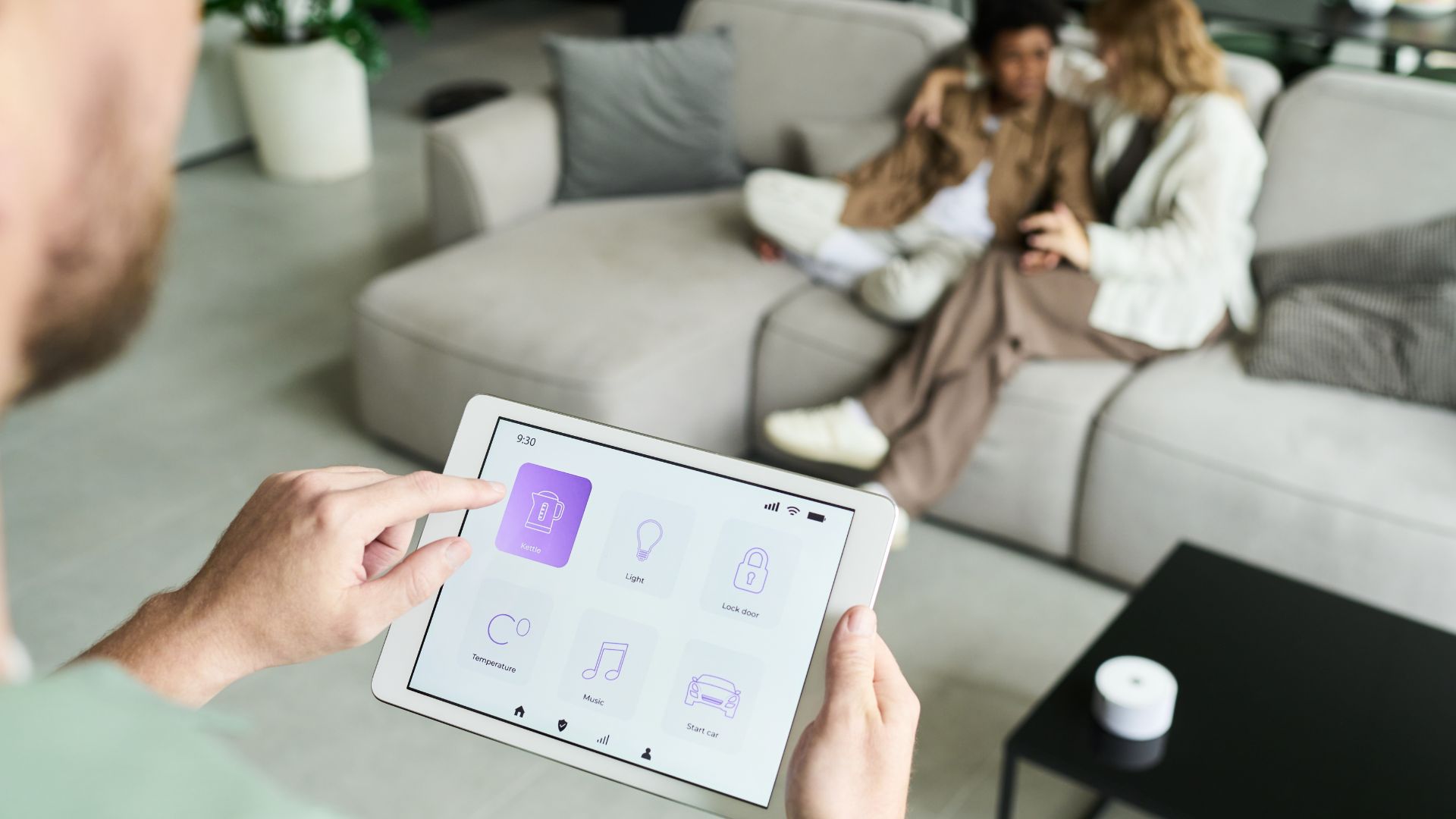
The application evolved to provide a clearer way of organising the home ecosystem, with devices grouped by room, support for managing multiple homes from a single account, and complete visibility into the status of every connected device.
The platform also introduced battery status indicators and automated alerts, allowing users to anticipate potential issues before they affect their experience.
This evolution also introduced Clevergy, a new capability designed to help users better understand and optimise their energy consumption. Through the app, users can access hourly electricity pricing, monitor their energy usage over time, compare it with similar households, and uncover potential savings through tailored recommendations on the most appropriate energy tariffs.
In doing so, Smart Home expands its value proposition, evolving beyond device management to deliver a more holistic and efficient approach to the connected home.
New intelligent monitoring and assistance capabilities
Video surveillance capabilities were significantly expanded in this phase. Users can now create recordings on demand, review historical clips, and access live camera feeds directly from alert notifications. The smart doorbell has also been enhanced with the ability to distinguish between visitors and package deliveries, enabling users to respond quickly without opening the app.
The conversational assistant powered by AWS generative AI, which was already integrated into the platform, was further enhanced with new capabilities. These included support for issue resolution, guidance through the setup of new devices, and the collection of user feedback through built-in surveys.
This intelligent assistance layer provides contextual support whenever users need it, reducing friction and enhancing the overall platform experience.
A smarter platform, ready to scale
This new phase further consolidated Smart Home as a solution ready to meet the evolving needs of the connected home.
Among the key achievements were:
- Introduction of new automation and personalisation capabilities based on user habits and occupancy.
- Integration of Movistar's HaaC technology to enhance the platform's contextual intelligence.
- Enhancement of the platform through AWS's cloud, IoT, and artificial intelligence capabilities, enabling new functionalities and use cases.
- Enhancement of video surveillance and remote monitoring capabilities.
- Introduction of new energy efficiency capabilities through the integration of Clevergy.
- Enhancement of user assistance through generative artificial intelligence.
- Advanced management capabilities for multiple homes, devices, and connected spaces.
- Validation of the solution with beta users in real home environments.
- Consolidation of a scalable platform ready to support the integration of new services, manufacturers, and use cases.
La colaboración entre Telefónica, Altostratus y AWS ha demostrado que es posible transformar una infraestructura IoT compleja en una experiencia de usuario accesible y fiable.
Through this new phase, Smart Home has evolved beyond connectivity into an increasingly intelligent and personalised platform, backed by the technological foundations and real-world insights needed for its next stage of growth.
Other success stories